Kazakhstan Renews Coursera Partnership, Mandates AI Literacy for All University Students
Astana, Kazakhstan — Kazakhstan’s Ministry of Science and Higher Education has renewed its strategic partnership with global online learning platform Coursera, embedding for-credit world-class courses into the national higher education system and requiring all university students to acquire foundational AI skills before graduation.
The expanded agreement will equip tens of thousands of Kazakh learners with industry-recognized certifications in high-demand fields such as Data Science, Cybersecurity, AI, Engineering, and Finance, directly supporting the country’s push to modernize its workforce for the digital economy.
“This renewal cements our commitment to providing every Kazakh student with access to the best education in the world,” said Dr. Sayasat Nurbek, Minister of Science and Higher Education of Kazakhstan. “By integrating for-credit courses and mandating AI literacy, we are ensuring our graduates are ready to lead in a rapidly changing global labor market.”
“Kazakhstan is setting a bold example for how nations can systematically bridge the gap between university curricula and career requirements using online learning at scale,” said Jeff Maggioncalda, CEO of Coursera. “We are proud to deepen this partnership and help build a future-ready workforce.”
Background
The collaboration, first established in 2022, has already reached over 235,000 students across more than 100 Kazakhstani universities. Learners have earned more than 500,000 certificates through the program, which now includes access to 13,500 courses from over 375 leading universities and companies worldwide.
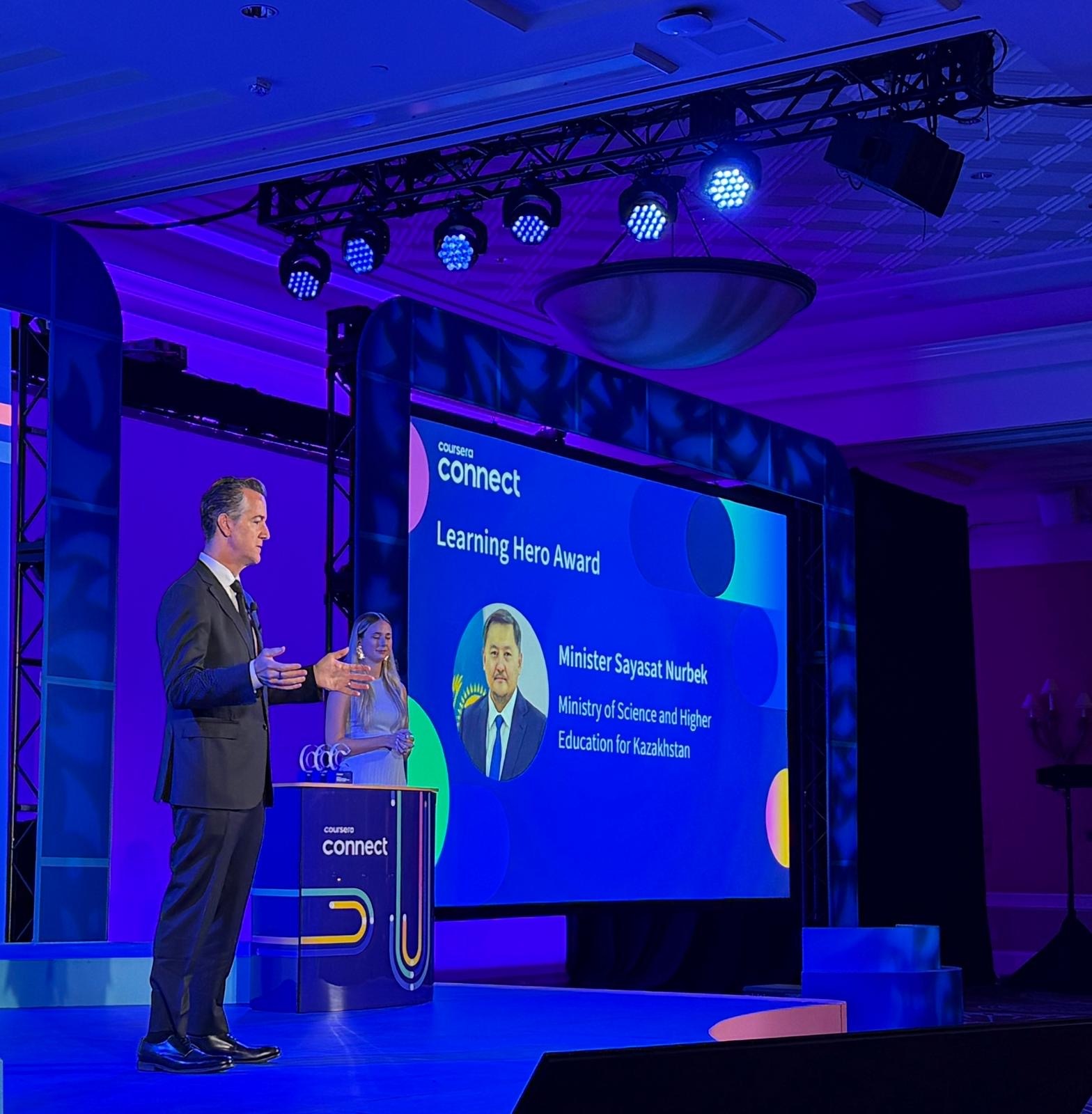
As part of the renewal, Coursera will also support the Ministry’s AI-Sana initiative, which mandates that every Kazakh graduate possess a foundational understanding of Generative AI and Digital Ethics. Over 1,100 GenAI courses—including Google AI Essentials and Anthropic’s Building with the Claude API—are now available to students.
What This Means
For Kazakh students, the partnership translates into official ECTS credits for job-relevant certifications that can be applied toward their degrees. This removes barriers between academic study and real-world skills, making graduates more competitive in the global digital economy.
Additionally, more than 4,000 courses—including those in AI, data science, and machine learning—have been translated into Kazakh, overcoming language barriers and making high-quality education accessible in the national tongue.
The renewed partnership is a critical step in Kazakhstan’s strategy to close the skills gap as digital transformation reshapes the labor market. By institutionalizing world-class learning from leading companies and universities, the Ministry aims to create a generation of graduates equipped with human, digital, business, and AI skills from day one.
Read more about the partnership history or see what this means for students.
Related Articles
- AI Agents Are Everywhere, But Most Are Mismanaged: New Research Reveals Optimal Structure for Scaling Agent Systems
- Mastering Markdown on GitHub: A Beginner's Q&A Guide
- Mastering KV Cache Compression: A Step-by-Step Guide with TurboQuant
- Breaking: Purple Team Dysfunction Exposed — Manual Operations Leave Networks Vulnerable
- The Surprising Dangers of Cognitive Offloading: How a Personal Knowledge Base Saves Your Skills
- Nature's Tiny Terminators: 10 Fascinating Facts About Scorpions' Metal-Reinforced Weapons
- 12 Months to Data Engineer: A Step-by-Step Self-Study Plan from a Data Analyst
- iPhone 18 Pro to Retain Controversial Aluminum Finish, Leaker Claims