JetStream 3.0 Revolutionizes Browser Performance Benchmarks with WebAssembly Focus
Breaking: Tech Giants Unveil JetStream 3.0 Browser Benchmark
Today, Apple, Google, and Mozilla jointly released JetStream 3.0, a major update to the cross-browser benchmark suite designed to measure modern web application performance more accurately. The new suite addresses critical flaws in its predecessor, particularly in how it tests WebAssembly (Wasm) workloads.
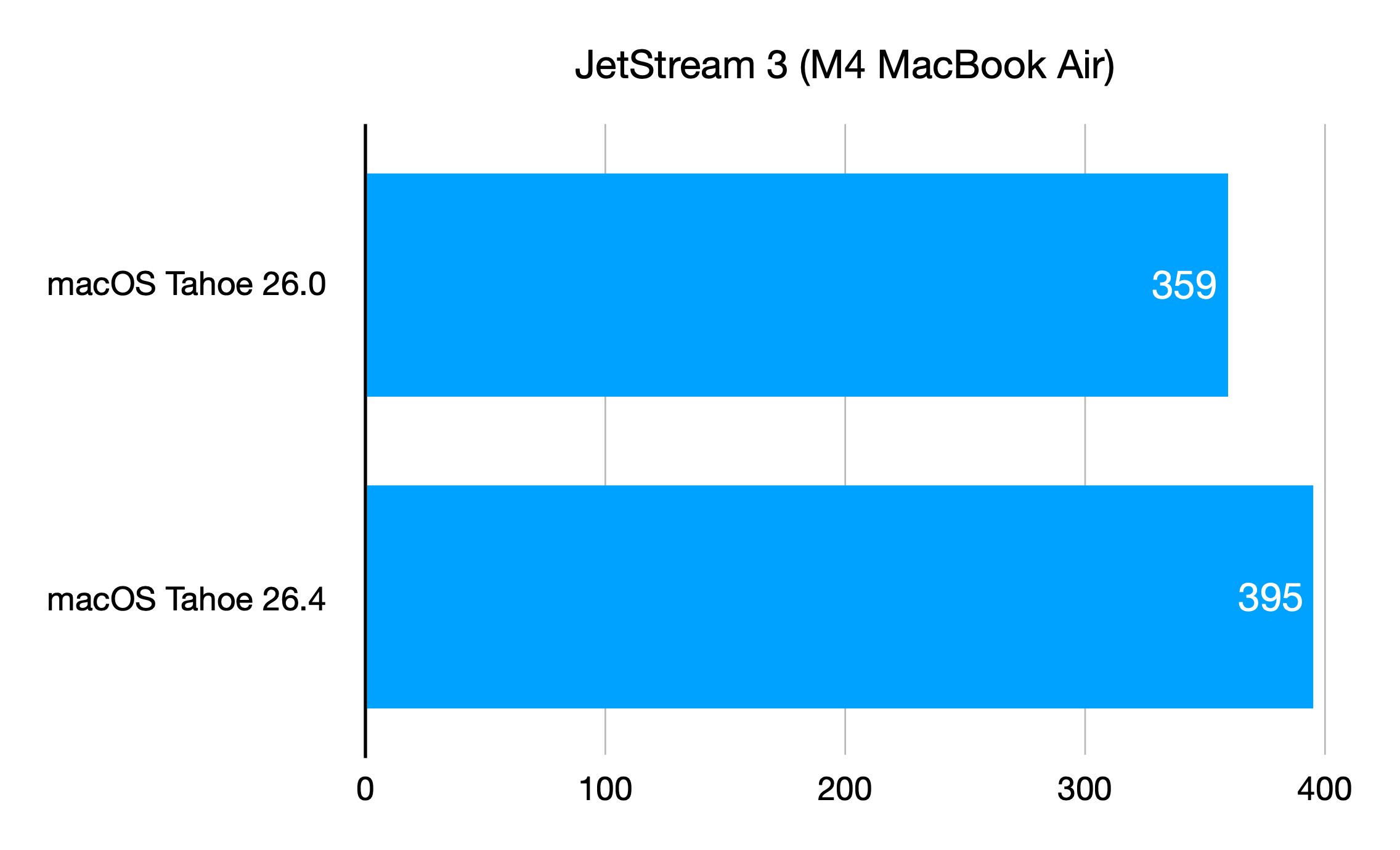
Key changes include a complete overhaul of Wasm scoring to prevent infinite scores and the inclusion of larger, real-world application scenarios. According to the WebKit team, "JetStream 3 represents both a refresh and a fundamental shift in how we measure performance."
Background: The Need for a Modern Benchmark
Benchmarks are essential tools for browser engine developers to drive performance improvements. However, the web constantly evolves, and older benchmarks become outdated as new best practices emerge. JetStream 2, launched when WebAssembly was in its infancy, primarily tested large C/C++ projects that compiled to asm.js, leading to a two-phase scoring system: Startup and Runtime.
Over time, browser engines like JavaScriptCore (WebKit) optimized Wasm instantiation so aggressively that startup times for small workloads reached near zero. In JetStream 2, this caused a mathematical anomaly: when time hit zero milliseconds, the score became infinity. The benchmark harness was patched in version 2.2 to clamp scores at 5000, but the problem signaled a deeper issue.
The Infinity Problem
As startup times dropped from 100 ms to 2 ms, even micro-optimizations (0.1 ms) suddenly represented a 5% performance gain. For WebKit, "shaving 0.1 ms off a 100 ms workload is indistinguishable from noise; however, once engines successfully reduced that instantiation time to just 2 ms, that same 0.1 ms improvement suddenly represented a 5% performance gain." This created a feedback loop where benchmarks no longer reflected real-world usage.
Moreover, modern web applications use Wasm in critical paths—libraries, image decoders, UI frameworks—where startup time matters. A "zero" score in a microbenchmark no longer accounted for actual user experience.
What This Means for Developers and Users
JetStream 3.0 introduces new Wasm subtests that measure both startup and runtime performance in a realistic context, preventing the infinity problem and ensuring scores reflect genuine improvements. The suite now includes larger, more complex workloads that mimic modern web apps, from data processing to video games.
For browser vendors, this update drives optimizations that benefit real-world performance rather than narrow benchmark gains. For users, it means faster load times and smoother interactions on the latest web applications.
Immediate impact: Developers can expect more meaningful comparisons between browsers. The WebKit team emphasized that "JetStream 3 represents both a refresh and a fundamental shift in how we measure performance, particularly regarding WebAssembly and the scale of modern web applications."
Collaboration and Future Outlook
The update was a collaborative effort among Apple (WebKit), Google (V8), and Mozilla (SpiderMonkey). Each team contributed to the design and validation of the new benchmarks. The shared announcement covers the breadth of the suite, but Apple’s WebKit team provided further insight into the engineering work within JavaScriptCore.
Moving forward, JetStream 3.0 will serve as the standard for browser performance testing until the next major shift. Developers using the suite can link to background details and what this means sections for context.
This is a breaking story. Updates may follow.
Related Articles
- Googlebooks: The Trojan Horse for Gemini AI
- 7 Essential Truths About the American Dream in 2025
- Revitalizing Windows File Browsing: Essential Tools and Tweaks
- 5 Ways AI Can Be Your Engineering Thinking Partner
- Unified Cloud Management with HCP Terraform and Infragraph: A Practical Guide
- GA4 Events vs Sessions: Understanding the Core Differences
- The Sunset of Cheap AI Subscriptions: 7 Critical Changes You Must Know
- Invincible Vs Shocks Critics as One of the Best Fighting Games in Years