How to Replicate Kazakhstan’s Model: Partnering with Coursera for National Higher Education Modernization
In an era of rapid digital transformation, higher education systems worldwide face the urgent challenge of aligning curricula with evolving career demands. Kazakhstan’s Ministry of Science and Higher Education has set a powerful example by renewing and deepening its partnership with Coursera, a global online learning platform. This guide breaks down the steps other nations or institutions can follow to replicate this successful model—integrating world-class, for-credit learning into national education to equip students with essential skills in AI, data science, cybersecurity, and more.
What You Need
- Government or Ministry-level Commitment: A dedicated education authority willing to champion digital learning reforms.
- University Network Engagement: Collaboration from public and private universities to adopt online courses for credit.
- Budget Allocation: Funding for platform subscriptions, course translation, and student access—typically through national education budgets or international grants.
- Language Resources: Translation teams to localize key content into the national language (e.g., Kazakh).
- Digital Infrastructure: Reliable internet connectivity and devices in universities to support online learning.
- Curriculum Review Committee: Experts to map Coursera courses to existing degree programs and ensure credit transfer (e.g., ECTS).
Step-by-Step Guide
Step 1: Secure High-Level Government Sponsorship
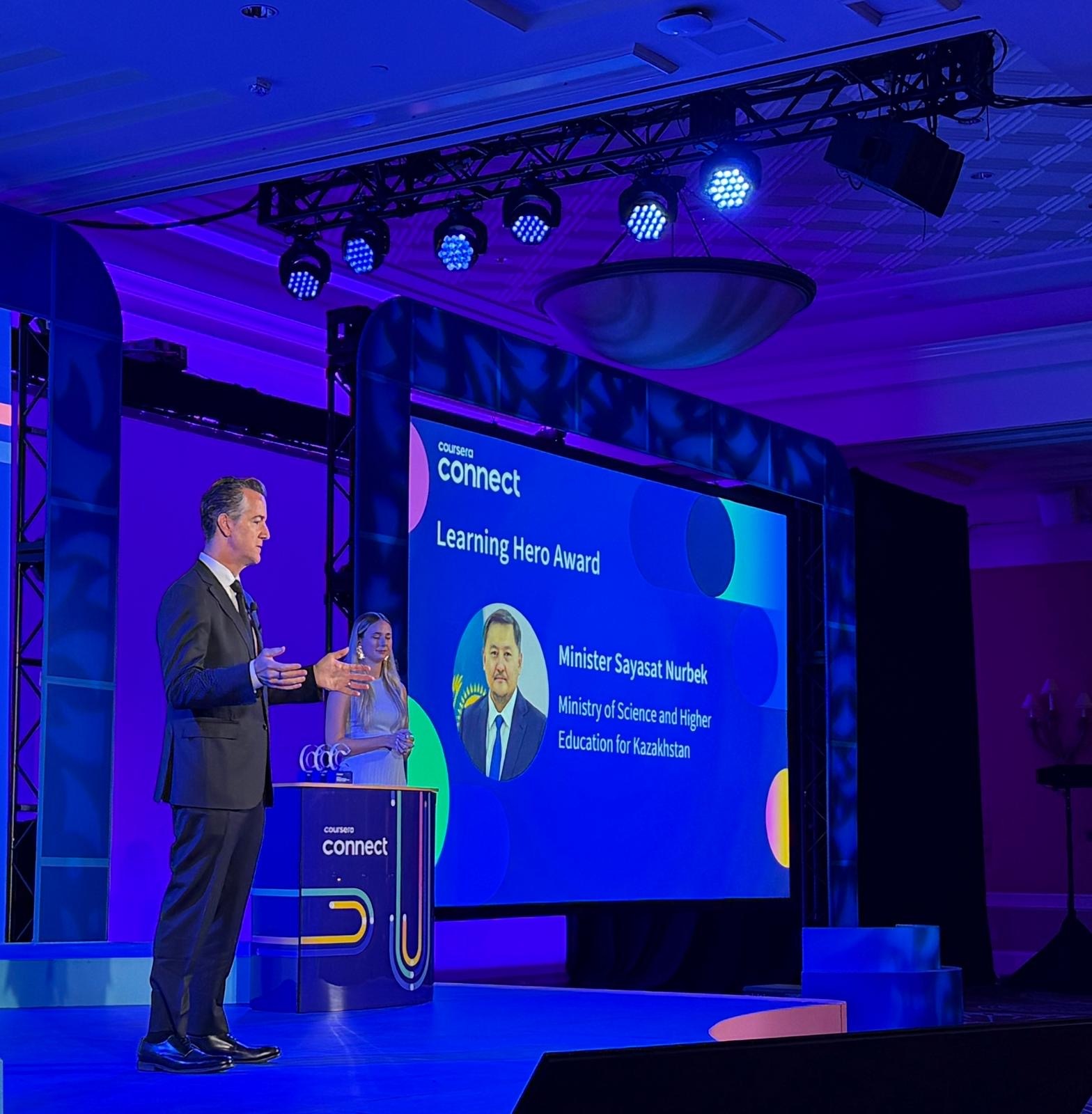
Approach your Ministry of Education, Science, or Higher Education to champion the initiative. Present evidence from Kazakhstan’s partnership: since 2022, over 235,000 students reached and more than 500,000 certificates earned across 100 universities. Emphasize how this model bridges the gap between curriculum and careers. Obtain official endorsement and assign a dedicated project lead.
Step 2: Identify Strategic Skill Priorities
Work with industry and academic stakeholders to pinpoint critical skills gaps. In Kazakhstan, the focus was on human, digital, business, and AI skills—especially generative AI. Create a list of high-demand domains: data science, cybersecurity, engineering, finance, AI. Use labor market data to justify your choices. This will guide which Coursera courses to prioritize.
Step 3: Negotiate a Tailored Partnership with Coursera
Contact Coursera for Campus representatives. Propose a national-level agreement similar to Kazakhstan’s: access to 13,500 courses from over 375 leading companies and universities. Request the ability for students to earn official transferable ECTS credits. Ensure the contract includes provisions for translating courses into your national language—Kazakhstan arranged over 4,000 courses in Kazakh on AI, data science, and machine learning.
Step 4: Integrate Coursera Courses into University Curricula for Credit
Work with each university to map selected Coursera courses to degree programs. Establish a process for students to enroll, complete assessments, and receive credit. Use the European Credit Transfer System (ECTS) as a standard for credit recognition, as Kazakhstan did. This ensures that online learning becomes a fundamental pillar of higher education.
Step 5: Provide Widespread Access to the Full Course Catalog
Roll out platform access to all students in your network. In Kazakhstan, tens of thousands of students gained access. You can adopt a similar model—either fully funded by the ministry or subsidized. Ensure that every student can explore courses beyond their major, fostering interdisciplinary skills.
Step 6: Launch a Foundational AI Literacy Initiative at Scale
AI literacy is now a foundational skillset. Kazakhstan launched the AI-Sana initiative, ensuring every graduate understands generative AI and digital ethics. Replicate this by mandating introductory AI courses for all students, such as Google AI Essentials or Anthropic’s Building with the Claude API. Your partnership with Coursera gives access to over 1,100 GenAI courses—leverage them.
Step 7: Translate Key Courses into the National Language
To overcome language barriers, arrange translation of priority courses. Kazakhstan translated over 4,000 courses into Kazakh. Identify your top 100-200 courses most relevant to national priorities and have them localized. This promotes inclusivity and ensures that the best education is accessible in the native tongue.
Step 8: Track Outcomes and Certifications
Set up a centralized dashboard to monitor student progress, certificate earn rates, and skills gained. Kazakhstan reported over 500,000 certificates earned from 100+ universities. Use this data to report success to stakeholders and refine course offerings. Certificates from leading companies (e.g., in data science, cybersecurity) boost graduate employability.
Step 9: Continuously Evaluate and Expand
Review the partnership annually. Add new courses based on emerging trends—AI, quantum computing, green skills. Expand access to more universities and even secondary schools. Consider offering micro-credentials or stackable certificates. The renewal of Kazakhstan’s partnership shows that ongoing commitment yields long-term benefits.
Tips for Success
- Start with AI literacy for all: Make foundational AI knowledge mandatory across all disciplines—it’s the new digital literacy.
- Involve employers: Engage industry partners to validate skill needs and sponsor certifications.
- Celebrate early wins: Share success stories of students who gained jobs or advanced their careers after completing Coursera courses.
- Invest in quality translation: Don't underestimate the impact of offering courses in the local language—it dramatically increases participation.
- Build a feedback loop: Collect student and faculty feedback regularly to improve course selection and credit policies.
- Leverage for-credit ECTS alignment: This legitimizes online learning within traditional academia and encourages enrollment.
By following these steps, education ministries can replicate Kazakhstan’s success, equipping their students with world-class skills for the global digital economy. The partnership model is proven—now it’s time to adapt and implement it in your own context.
Related Articles
- Pandemic Eroded Girls' Math Progress, Global Study Reveals
- 10 Ways to Find Fulfillment in a Job You Can't Leave
- Kazakhstan Expands Partnership with Coursera: For-Credit Learning and AI Skills for All Students
- Cloudflare's 'Fail Small' Initiative: A Stronger, More Resilient Network for Customers
- Oracle NetSuite Unleashes AI Coding Assistants for SuiteCloud Developers
- Carbon Brief Offers Paid Three-Week Summer Journalism Internship for Aspiring Climate Reporters
- How 100 Self-Driving Cars Tamed Traffic Jams Using Reinforcement Learning
- How Dell and Lenovo Are Leading the Charge for Linux Firmware Updates