How Azure Integrated HSM Delivers Hardware-Grade Security and Open Transparency
Trust in the cloud depends on more than just promises—it requires verifiable, hardware-backed security at every layer. Microsoft’s Azure Integrated Hardware Security Module (HSM) is a custom-built, tamper-resistant module embedded directly into every new Azure server. This approach brings FIPS 140-3 Level 3 protection to where workloads run, making strong cryptographic security a native property of the infrastructure. Unlike centralized key management services, the Integrated HSM provides hardware-enforced isolation and key protection that scales automatically with the platform. To further build trust, Microsoft has open-sourced the design specifications, allowing customers, partners, and regulators to validate the security boundaries. Below, we answer common questions about this groundbreaking technology.
What is Azure Integrated HSM and how does it differ from traditional HSM solutions?
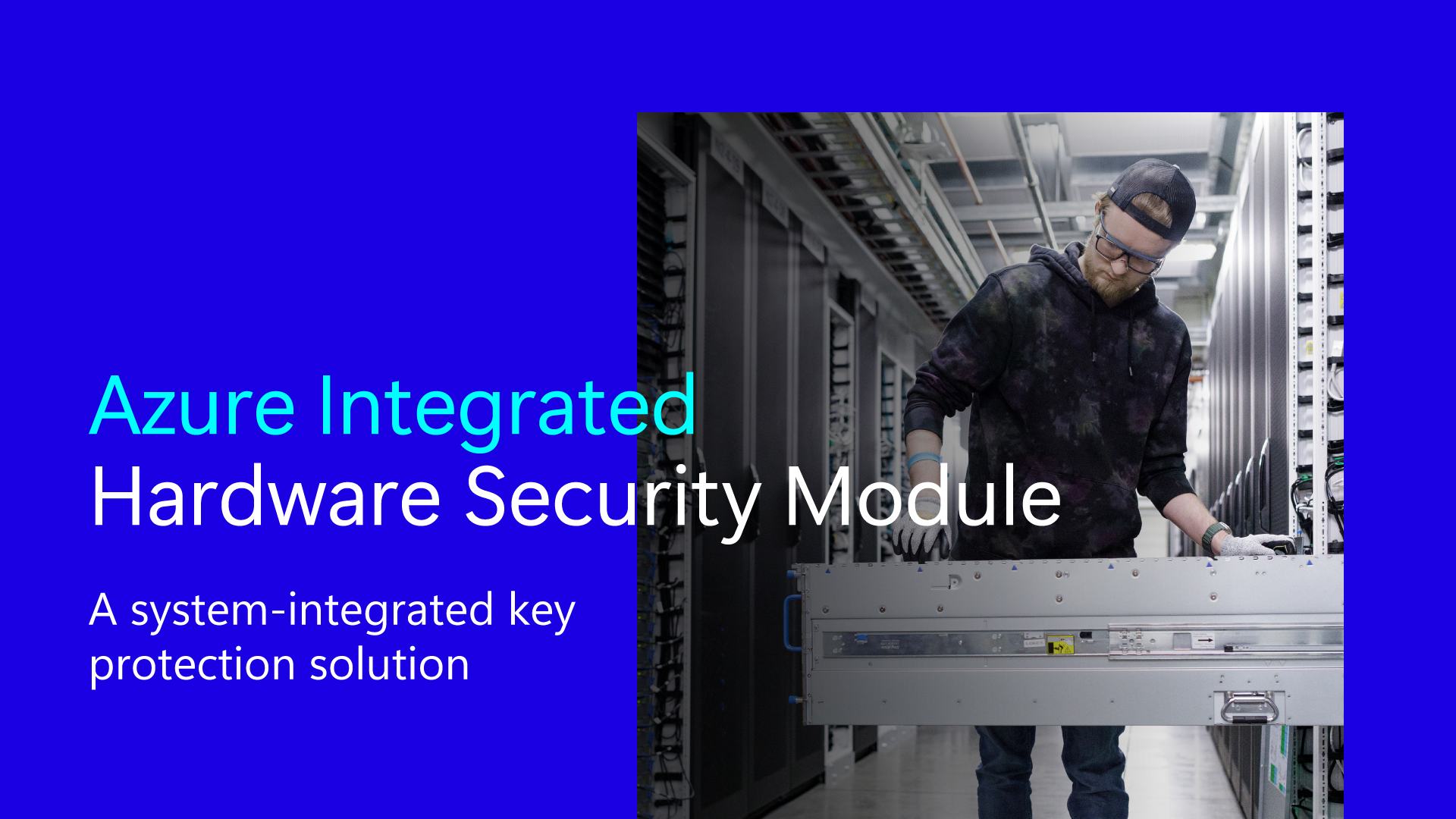
Azure Integrated HSM is a purpose-built hardware security module that Microsoft designs and manufactures. It is integrated into every new Azure server at the factory, making it a native part of the compute platform rather than an add-on appliance. Traditional HSMs are often centralized devices or PCIe cards that require separate management and network connectivity. In contrast, the Integrated HSM brings hardware-enforced key protection directly to the server where data is processed. This eliminates latency, reduces attack surface, and ensures that cryptographic operations happen in a FIPS 140-3 Level 3 tamper-resistant environment. By embedding the HSM into every server, Azure delivers consistent, hardware-backed security across the entire fleet, with no need for customers to provision or configure additional security modules.
Why did Microsoft choose to build its own HSM instead of using third-party modules?
Microsoft’s decision to build a custom HSM was driven by the need for deep integration, scalability, and trust assurance. Third-party modules often introduce supply chain complexity, certification delays, and limited design transparency. By designing its own HSM, Microsoft controls every aspect—from silicon to firmware—ensuring that security properties align exactly with Azure’s architectural requirements. This vertical integration allows the HSM to be embedded into the server motherboard, using a dedicated microprocessor and protected memory. It also enables Microsoft to open-source the design specifications, a step rarely possible with off-the-shelf modules. Building in-house gives Microsoft the agility to patch vulnerabilities rapidly and to evolve the HSM as threats change, all while maintaining the highest levels of certification.
What does FIPS 140-3 Level 3 certification mean and why is it important?
FIPS 140-3 Level 3 is a rigorous security standard defined by the US National Institute of Standards and Technology (NIST) for cryptographic modules. Level 3 requires strong tamper resistance—the module must detect and respond to attempts at physical or logical intrusion, erasing keys if necessary. It also mandates hardware-enforced isolation between security functions and other system components. For cloud services, achieving Level 3 means that keys stored in the HSM cannot be extracted even if an attacker gains physical access to the server. This level of assurance is essential for governments, financial institutions, healthcare organizations, and other regulated industries that must protect sensitive data. By making FIPS 140-3 Level 3 a default property of Azure servers, Microsoft eliminates the need for customers to purchase or configure specialized hardware to meet compliance requirements.
How does Azure Integrated HSM improve cryptographic trust for cloud workloads?
Cryptographic trust hinges on the secrecy and integrity of keys. Azure Integrated HSM anchors trust in hardware that is physically protected and logically isolated. Because the HSM is embedded in every server, cryptographic operations—such as signing, encryption, or key generation—occur in a protected enclave directly on the compute node. This avoids moving keys across the network, reducing exposure to interception or man-in-the-middle attacks. Furthermore, the HSM uses a dedicated key hierarchy, where tenant keys are wrapped by platform keys that never leave the module. If a server is compromised or decommissioned, the HSM securely erases all keys. For customers, this means that their cryptographic material is protected by a hardware root of trust that is auditable, certified, and transparently designed—building confidence that their data stays secure even in multi-tenant environments.

What role does open-sourcing play in reinforcing transparency and security?
Microsoft believes that openness strengthens security. By open-sourcing the HSM design specifications—including hardware schematics, firmware interfaces, and security boundaries—the company invites independent review from security researchers, customers, and regulators. This transparency allows the community to validate that the HSM behaves as documented and does not contain backdoors or hidden vulnerabilities. Open-sourcing also fosters collaboration: partners can build complementary tools, and customers can integrate the HSM more deeply into their own security monitoring. While Microsoft still manufactures and manages the HSM hardware, the open designs provide a verifiable chain of trust. This approach contrasts with “security by obscurity” and aligns with modern expectations for critical infrastructure. Ultimately, open-sourcing reinforces that Azure’s security claims are not just marketing—they are backed by designs anyone can inspect.
How does Azure Integrated HSM benefit regulated industries and government customers?
Regulated industries—such as finance, healthcare, defense, and energy—require demonstrable compliance with standards like PCI-DSS, HIPAA, FedRAMP, and GDPR. Azure Integrated HSM helps meet these requirements by providing hardware-backed key protection that is already certified to FIPS 140-3 Level 3. Because the HSM is integrated into every server, customers no longer need to provision separate HSMs for each compliance zone, reducing cost and complexity. The open-sourced designs also satisfy audit demands for supply chain transparency and design validation. For government customers handling classified or controlled unclassified information, the HSM’s tamper response and key isolation provide the highest assurance that cryptographic keys are never exposed. Microsoft’s commitment to regular third-party penetration testing and continuous certification ensures that the HSM remains a trusted component for the most sensitive workloads.
What are the key design principles behind Azure Integrated HSM?
Azure Integrated HSM was designed with three core principles: hardware-rooted trust, transparency, and zero-trust integration. First, hardware-rooted trust means that every cryptographic operation relies on a dedicated secure microprocessor with protected memory, isolated from the host CPU and operating system. Second, transparency is achieved through open-sourced designs and public documentation, enabling independent validation. Third, zero-trust integration ensures that the HSM does not implicitly trust any software running on the host—each request must be authenticated and authorized. Additional design choices include a fully homomorphic encryption roadmap, secure boot for firmware integrity, and a sealed key hierarchy where tenant keys are encrypted under platform keys that never leave the module. These principles ensure that the HSM not only protects keys but also aligns with modern security architectures like confidential computing and secure enclaves.
Related Articles
- Apple's AI Strategy at WWDC 2026: A New Era of Intelligence and Choice
- Ethereum Foundation Unveils Clear Signing Standard to End Cryptic Transaction Approvals
- 10 Smart Reasons to Invest $3,000 in SentinelOne: The Under-the-Radar AI Stock
- Kaspersky Unveils New 'Undefined Trust Level' Category to Combat Deceptive Websites
- Beyond Marketing: Why Scouting's Decline Stems from Years of Inattention
- AI Arms Race Drives Record Capital Expenditures Among Tech Titans
- Rust WebAssembly Targets to Drop Crucial Compatibility Flag, May Break Existing Projects
- 7 Key Facts About Boltz’s Non-Custodial USDC Swaps for Bitcoin