Unveiling the Rocky Secrets of Uranus and Neptune: A New Study Challenges Old Labels
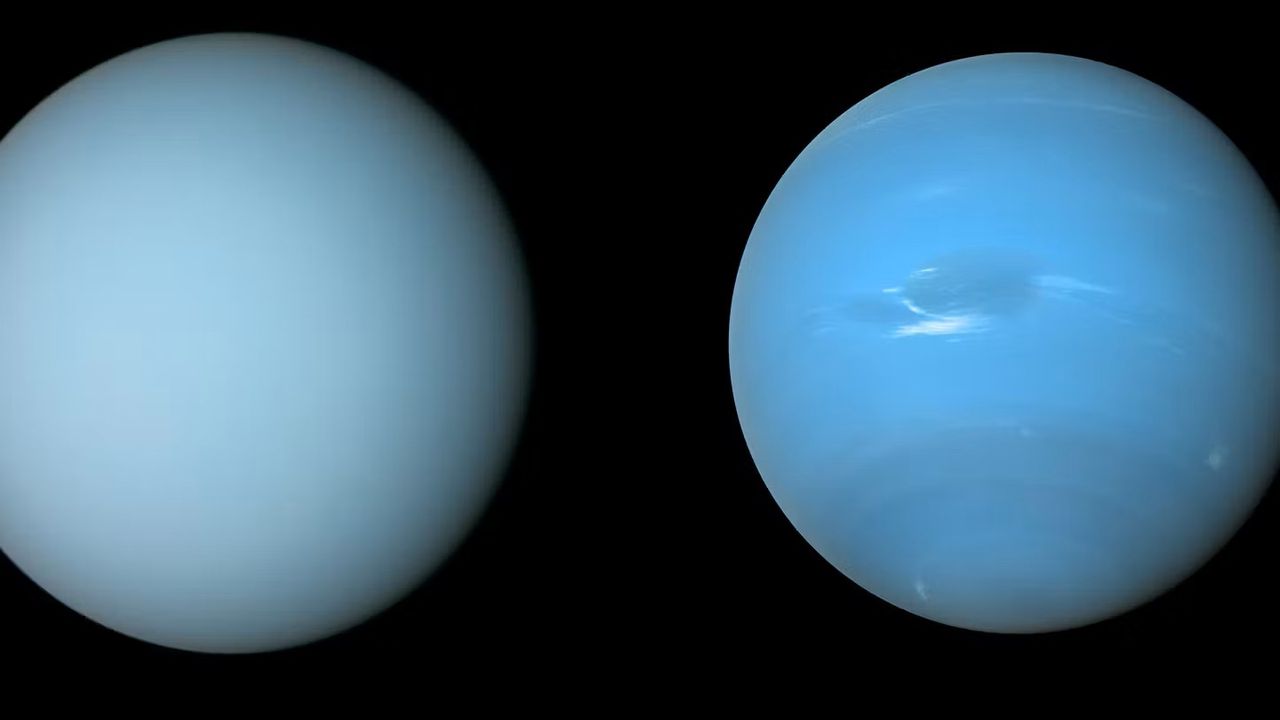
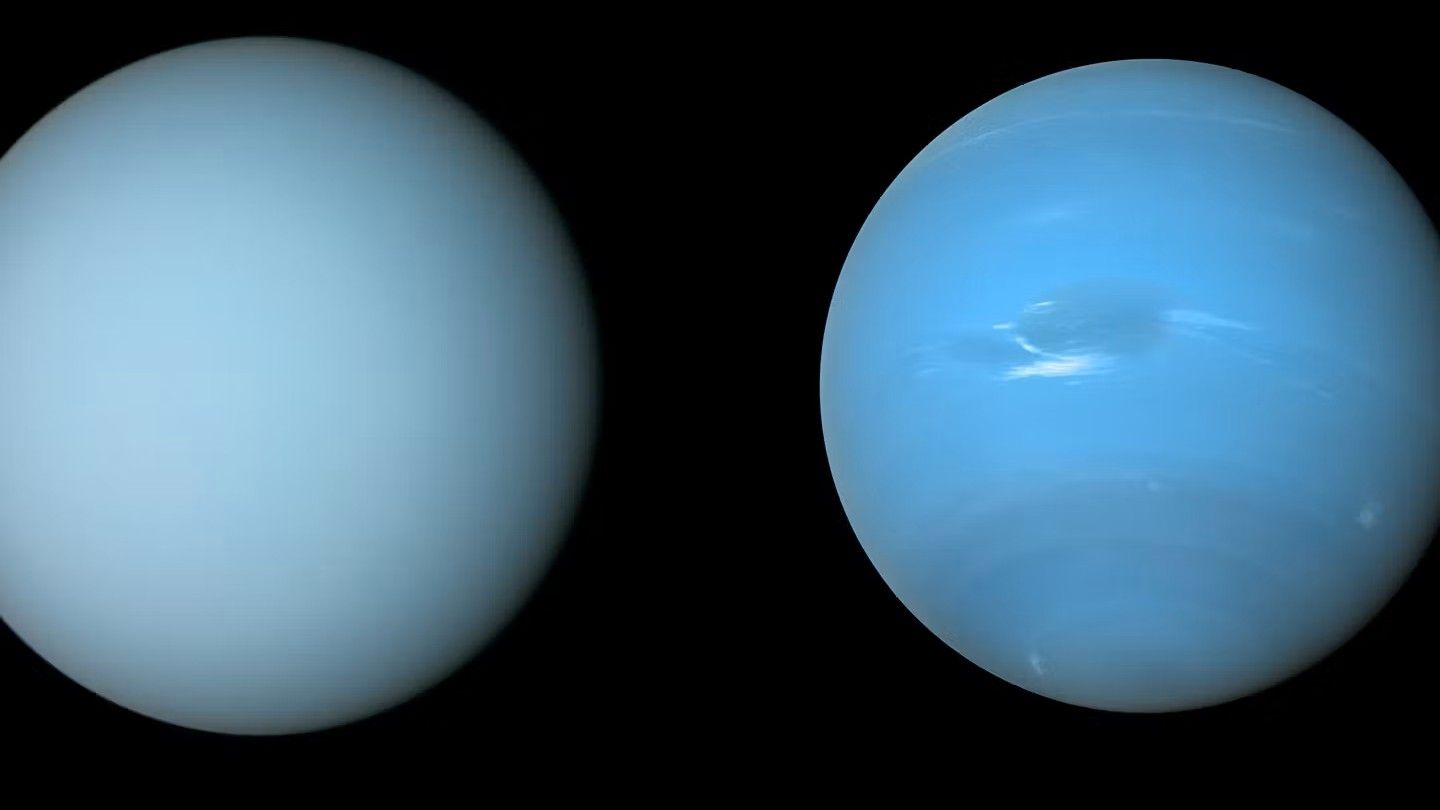
Uranus and Neptune have long been classified as "ice giants," but a recent study suggests their interiors may be far rockier than previously believed. This revelation could rewrite our understanding of how these distant worlds formed and evolved. Instead of the traditional icy or rocky descriptors, researchers propose a new category: "minor giants." Let's dive into the questions and answers that unpack this fascinating discovery.
What Exactly Did the New Study Discover About Uranus and Neptune?
The study, published in Nature Astronomy, reanalyzes data from the Voyager 2 flybys and ground-based observations. It suggests that Uranus and Neptune contain a much higher proportion of rocky material—like silicates and metals—than the standard ice giant model predicts. Previous models assumed their interiors were mostly water, methane, and ammonia ices. However, by comparing their gravitational fields and magnetic properties to computer simulations, the researchers found that a rocky core could be up to 50% of their total mass. This means the planets are not just slushy balls of ice but have substantial solid, rock-like interiors. The team argues that the term "ice giant" is misleading and that "minor giant" better captures their mixed composition.
Why Have Uranus and Neptune Been Called Ice Giants Until Now?
The label "ice giant" stems from their position in the solar system beyond Saturn and from early models suggesting they formed from a mix of ices and gas. Unlike Jupiter and Saturn, which are mostly hydrogen and helium (gas giants), Uranus and Neptune contain more heavy elements. Spectroscopy reveals abundant methane, water, and ammonia in their atmospheres, leading scientists to infer icy interiors. Additionally, their strong magnetic fields, offset from the planet centers, hinted at a layered structure—ice above a small rocky core. For decades, this classification stuck, but it always had uncertainties. The new study challenges this narrative by showing that the "icy" layer might actually be a mixture of rock and ice, with rock dominating.
How Do Scientists Determine What’s Inside Uranus and Neptune?
Scientists use a combination of techniques: gravitational field measurements (from spacecraft, like Voyager 2, and ground-based telescopes), magnetic field data, and theoretical models. By tracking how the planets affect nearby spacecraft, they can infer the distribution of mass inside. A more lumpy gravitational field suggests a rocky core. Magnetic fields also give clues—Uranus and Neptune have fields that are tilted and offset, indicating a non-uniform interior. Computer simulations then test different compositions (e.g., pure ice vs. ice-rock mixtures) to see which matches the observations. The new study used advanced equations of state for rock and ice at extreme pressures to show that rock-rich models fit the data better. This is a major step forward in planetary interior modeling.
What Does the Term “Minor Giants” Mean, and Why Do Researchers Suggest It?
The researchers propose replacing "ice giant" with "minor giant" because it more accurately describes the planets' composition and size. "Minor" refers to their smaller mass compared to Jupiter and Saturn (hence gas giants are "major"), while "giant" reflects they are still huge relative to Earth. They argue that "ice" is misleading because rock may be the dominant solid component. In a press release, lead author Dr. Sarah Johnson said, "Rather than 'icy' or 'rocky,' we should simply call them minor giants." This new term also encompasses other exoplanets of similar size and composition, which are commonly found in other star systems. It streamlines classification and avoids assumptions about their internal chemistry.
What Implications Does This Study Have for Our Understanding of Planet Formation?
If Uranus and Neptune are rockier than thought, it changes the timeline and location of their formation. The classic model says they formed in the outer solar system where ices were abundant, but a rock-rich interior suggests they may have formed closer to the Sun or later accreted more rocky material. It also implies that the boundary between rocky (terrestrial) planets and gas/ice giants is fuzzier. Exoplanet surveys show that planets in the size range between Earth and Uranus ("sub-Neptunes") are common, and this study provides a template for their internal structures. Moreover, understanding Uranus and Neptune helps refine theories of solar system evolution, including the Great Tack hypothesis and the migration of giant planets. The discovery could even affect how we interpret data from future missions like NASA's Uranus Orbiter and Probe.
Could There Be a Mission to Confirm These Findings?
Yes, the study highlights the need for a dedicated orbiter mission to Uranus and Neptune. Currently, only Voyager 2 has flown by them (in 1986 and 1989), providing brief snapshots. A NASA flagship mission to Uranus is under serious consideration (the Uranus Orbiter and Probe, or UOP, is a high priority in the 2023 Planetary Science Decadal Survey). Such a mission could carry instruments to map gravitational and magnetic fields in high detail, measure atmospheric composition, and even drop a probe to study the interior. Direct seismic or electromagnetic sounding could confirm the rock fraction. The new study’s predictions give scientists specific targets to test. Until then, we rely on models and indirect evidence, but the case for a rockier interior is compelling, making Uranus and Neptune even more mysterious and intriguing.
Related Articles
- Curiosity Rover Shakes Off Stubborn Martian Rock in Unprecedented Drill Mishap
- New Cambrian Fossil Discovery Challenges Existing Views on Early Animal Evolution
- How Scientists Restored Memory by Targeting a Single Alzheimer's Protein: A Step-by-Step Research Guide
- 2026 Predicted to Break Global Heat Records: Q&A with a Climate Expert
- From Threat to Opportunity: How a California Startup Plans to Deflect Asteroid Danger with a Historic Space Ride-Share
- 10 Key Insights into Sakana AI's KAME: Redefining Real-Time Conversational AI
- How Scientists Uncovered the Cosmic Sweet Spot That Makes Life Possible
- In The Black Q&A: Inside the Newtonian Space Combat Sim from X-Wing and MechWarrior Veterans