Next-Gen Martian Rotorcraft: Q&A on NASA's Post-Ingenuity Helicopter Breakthroughs
Following the groundbreaking success of the Ingenuity helicopter, engineers at NASA's Jet Propulsion Laboratory (JPL) are advancing rotor technology for future Mars missions. This Q&A covers key developments, including Ingenuity's legacy, new rotor breakthroughs, the SkyFall mission, and the role of nuclear power.
What was the significance of Ingenuity's mission, and how did it end?
Ingenuity made history as the first aircraft to fly on another world. Originally planned for just five flights over 30 days, it completed 72 flights before crash-landing in January 2024. Delivered to Mars by the Perseverance rover, it proved that aerial exploration on Mars is viable, covering distances and reaching areas inaccessible to rovers. Its success demonstrated that rotorcraft can navigate the red planet's thin atmosphere, opening a new era of exploration. The mission far exceeded expectations, providing invaluable data for future designs.
What are the key improvements in the next-generation rotor technology?
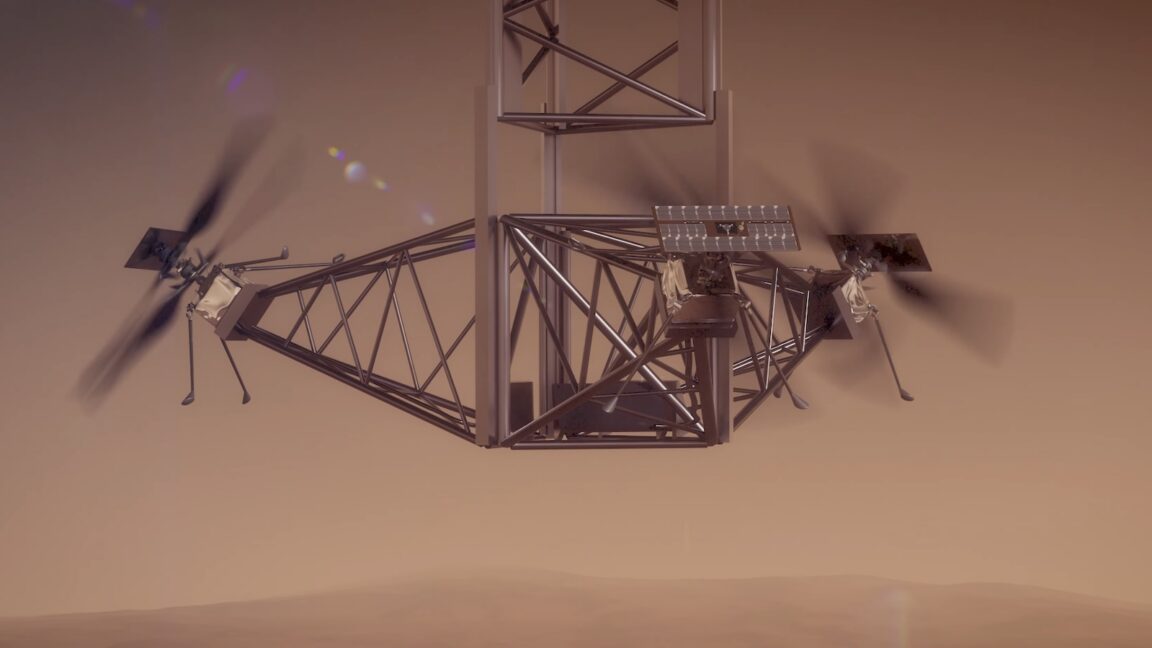
JPL engineers are designing rotor blades that are longer and more aerodynamically efficient to generate lift in Mars' low-density atmosphere (<1% of Earth's). These blades spin at higher speeds and incorporate advanced materials to handle stress while reducing weight. The new rotors aim to carry heavier payloads—from science instruments to sample collection tools—over longer distances. Computational models and wind-tunnel tests at JPL have refined blade shapes to maximize thrust with minimal power consumption. The breakthroughs enable future helicopters to travel tens of kilometers per flight, compared to Ingenuity's maximum of around 700 meters.
What is the SkyFall mission and when might it launch?
SkyFall is NASA's planned mission to send three advanced helicopters to Mars. It could launch as early as late 2028, building directly on Ingenuity's designs. The helicopters will be part of a larger effort to explore regions like canyon walls, lava tubes, and polar ice. Each rotorcraft will operate independently but share data via a relay network. The mission will also test new navigation algorithms to autonomously land in challenging terrain. SkyFall represents a major step toward using aerial platforms for sustained, wide-ranging science.
How will the new helicopters differ from Ingenuity?
While Ingenuity was a technology demonstrator weighing about 1.8 kg (4 pounds), the new helicopters are planned to be significantly larger—up to 15–20 kg (33–44 pounds). They will feature four or more blades (instead of two) to increase lift capacity. The onboard computers will be upgraded for autonomous flight and hazard detection. Power systems will use larger solar panels and more efficient batteries. The helicopters will also carry scientific instruments, such as spectrometers and cameras, for direct atmospheric and geological analysis. Their design emphasizes durability and extended range, enabling months of operation.
What payload and distance goals are set for the next-gen rotorcraft?
The new Martian helicopters aim to carry payloads of 5–10 kg (11–22 pounds) each flight, enabling deployment of full science suites. Distance goals range from 10 to 30 kilometers per flight, compared to Ingenuity's record of ~700 meters. This will allow exploration of vast terrains, like the rim of Jezero Crater or the Elysium Planitia region. The aircraft are expected to fly at altitudes up to 2,000–3,000 meters above the Martian surface, covering more vertical extent. These parameters will support sample collection, atmospheric profiling, and reconnaissance for future human missions.
What is the Space Reactor-1 (SR-1) spacecraft and its role in this effort?
Space Reactor-1 (SR-1) is a nuclear-powered spacecraft that will transport the SkyFall helicopters to Mars. Announced by NASA Administrator Jared Isaacman, it's part of a technology demonstration program to use nuclear propulsion for deep space missions. SR-1 will provide efficient, high-speed transit to Mars, reducing travel time and enabling larger payloads. The spacecraft will also power the helicopters' entry, descent, and landing systems. The reactor design is compact and heavily shielded, drawing from decades of NASA research. Once at Mars, SR-1 will serve as a communication relay before potentially deploying additional assets.
Related Articles
- 8 Critical Steps in Preparing NASA's Roman Space Telescope for Launch
- 10 Things You Need to Know About Capcom's PRAGMATA Landing on GeForce NOW
- 57 Nations Forge a Clear Roadmap to End Fossil Fuel Dependence at Landmark Colombia Summit
- Artemis II's Laser Link Beams Unprecedented HD Views from Deep Space
- How to Conduct Inclusive UX Research: A Practical Guide from Dr. Michele Williams
- May 2026 Night Sky Guide: Meteors, Planets, and a Blue Moon
- How to Assess and Mitigate Command Execution Risks in Your MCP Deployments
- Critical Clean Room Hardware Delivered for Roman Space Telescope Launch Prep