10 Key Insights into Vault Secrets Operator (VSO) for Kubernetes Secret Management
Managing secrets in Kubernetes remains one of the biggest headaches for platform teams. As clusters multiply across clouds, the old question of “how do I get a secret into my pod?” evolves into a far more complex challenge: how do you manage the entire lifecycle—from generation to injection, rotation, and revocation—without slowing down development? Native Kubernetes Secrets fall short for enterprise governance, and teams often turn to HashiCorp Vault, the industry standard for centralized secrets management. But with multiple integration patterns available, choosing the right approach can be overwhelming. This article unpacks the 10 essential things you need to know about the Vault Secrets Operator (VSO) and why it’s becoming the go-to solution for modern Kubernetes and OpenShift environments.
1. The Shortcomings of Native Kubernetes Secrets
Kubernetes Secrets are base64-encoded, not encrypted by default, and lack fine-grained access control or audit trails. They offer minimal lifecycle management—rotation, revocation, and secure delivery across clusters become manual and error-prone. As enterprises scale, relying solely on native secrets creates a security gap and operational burden. A centralized, platform-agnostic approach is essential for meeting compliance and governance needs.
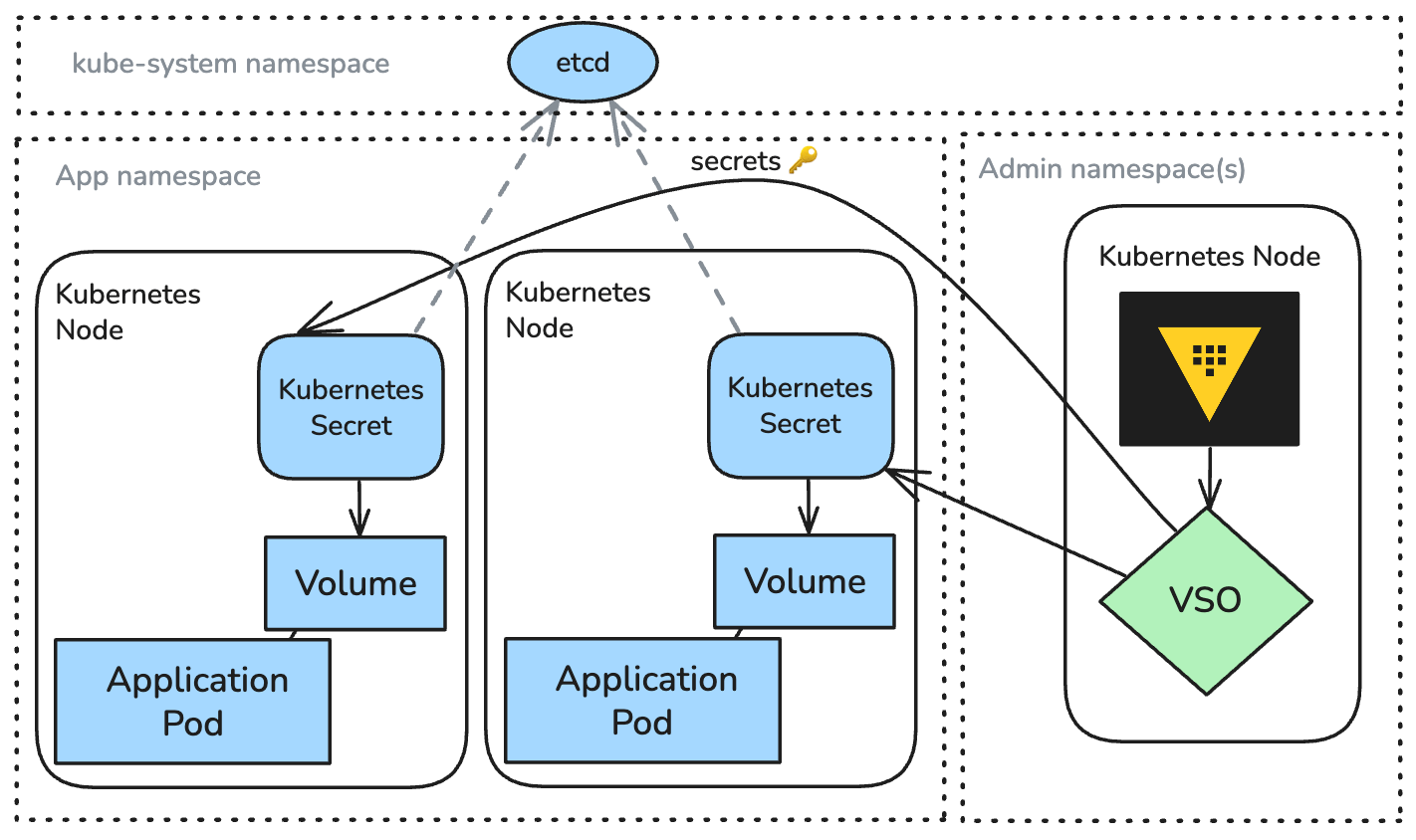
2. Why Centralized Secret Management Is Table Stakes
With hybrid cloud adoption, secrets must be managed consistently across Kubernetes and non-Kubernetes workloads. Vault provides a unified control plane for storing, rotating, and auditing secrets, with identity-based access policies. This centralization reduces sprawl and ensures that developers can access secrets securely without slowing down. It’s no longer optional—it’s a fundamental requirement for enterprise security.
3. The Landscape of Vault Integration Patterns
Multiple methods exist to deliver Vault secrets to Kubernetes pods: the Vault Agent Sidecar Injector, the Secrets Store CSI Driver, third-party operators, and the newer Vault Secrets Operator (VSO). Each has distinct trade-offs in security, operational overhead, and developer experience. Knowing which to use depends on your environment, but VSO is emerging as the recommended standard.
4. The Legacy Sidecar Injector: Still Viable but Complex
The Vault Agent Sidecar Injector was the first robust solution. It injects a Vault agent container into each pod to fetch and manage secrets. While powerful, it introduces additional resource overhead, requires sidecar configuration, and can complicate service meshes. Maintenance and scaling across many pods become challenging, prompting many teams to seek a simpler approach.
5. The Shift Toward Kubernetes-Native Operators
The Kubernetes ecosystem has embraced the operator pattern to automate operational tasks. Operators extend the Kubernetes API with custom resources, enabling declarative management of complex applications. For secret management, a dedicated Vault operator means you can define secrets as Kubernetes resources and let the operator handle reconciliation, rotation, and injection. This aligns with modern cloud-native principles.
6. Introducing Vault Secrets Operator (VSO)
Developed in partnership with Red Hat (now part of IBM), Vault Secrets Operator (VSO) is a Kubernetes-native operator that manages the entire secret lifecycle. It uses custom resource definitions (CRDs) like VaultAuth and VaultSecret to synchronize secrets from Vault into Kubernetes, with automatic rotation and revocation. VSO eliminates the need for sidecars, reducing complexity and resource consumption. It’s designed for high availability and scalability.
7. How VSO Automates the Secret Lifecycle
VSO continuously watches for changes in Vault and updates Kubernetes Secrets accordingly. It supports dynamic secrets, renewable leases, and revocation—all without modifying pod specifications. This means developers interact with secrets exactly as they always have (via volumes or environment variables), while platform teams gain centralized control. Rotation happens transparently, reducing the risk of stale or compromised secrets.
8. VSO with Built-In CSI Companion: Protected Secrets
For environments demanding enhanced isolation, VSO offers a protected secrets mode that pairs with the Container Storage Interface (CSI) driver. This approach stores the secret in a dedicated CSI volume, never writing it to etcd, and mounts it directly into pods. It combines the operator’s lifecycle automation with the security of CSI, ideal for highly regulated workloads.
9. Comparing VSO with Third-Party Operators
Third-party operators like External Secrets Operator or Kubernetes External Secrets provide similar functionality but often lack deep Vault integration. VSO is built specifically for Vault, supporting advanced features like dynamic secrets, lease management, and revocation natively. It also benefits from direct HashiCorp and Red Hat support, ensuring future compatibility and enterprise-grade reliability.
10. VSO as the Modern Recommended Standard
Given its Kubernetes-native design, reduced operational complexity, and seamless lifecycle management, VSO is now the recommended pattern for most Vault-Kubernetes integrations. It preserves the developer experience while giving platform teams the security and governance they need. As Vault continues to evolve, VSO stands out as the future-proof choice for enterprises adopting Kubernetes at scale.
Choosing the right secret management strategy for Kubernetes is critical. VSO simplifies the process, enhances security, and aligns with cloud-native best practices. Whether you’re migrating from the sidecar injector or starting fresh, VSO offers a streamlined path to automated, enterprise-grade secret management.
Related Articles
- RubyGems Halts New Registrations Amid Surge of Malicious Package Uploads
- UNC6692 Cyber Espionage: How Fake IT Support Delivered Custom Malware via Teams
- Building a DDoS Defense Strategy: Lessons from the Brazilian ISP Botnet Attack
- Navigating a Cyberattack on Learning Platforms: Lessons from the Canvas Incident
- 6 Essential Insights into Streamlining Kubernetes Secret Management with Vault
- Transform an Affordable IKEA Lamp into a Customizable Smart RGB Light with WLED
- Securing VMware vSphere Against BRICKSTORM: A Comprehensive Hardening Guide
- New Phishing Scheme Uses Google AppSheet to Hijack 30,000 Facebook Accounts