New Study Reveals the Brain's Memory Center Begins with Rich Neural Connections, Not a Blank Slate
Introduction
For decades, neuroscientists have debated whether the brain's memory center starts as a blank slate, ready to be filled by experiences, or whether it comes pre-equipped with a basic wiring diagram. A new study conducted on mice offers compelling evidence that early in life, the neural networks in the brain's memory center are highly connected—far from a blank slate—and that these connections are later refined into precise systems as the animal matures. This discovery upends long-held assumptions about memory formation and neural development.
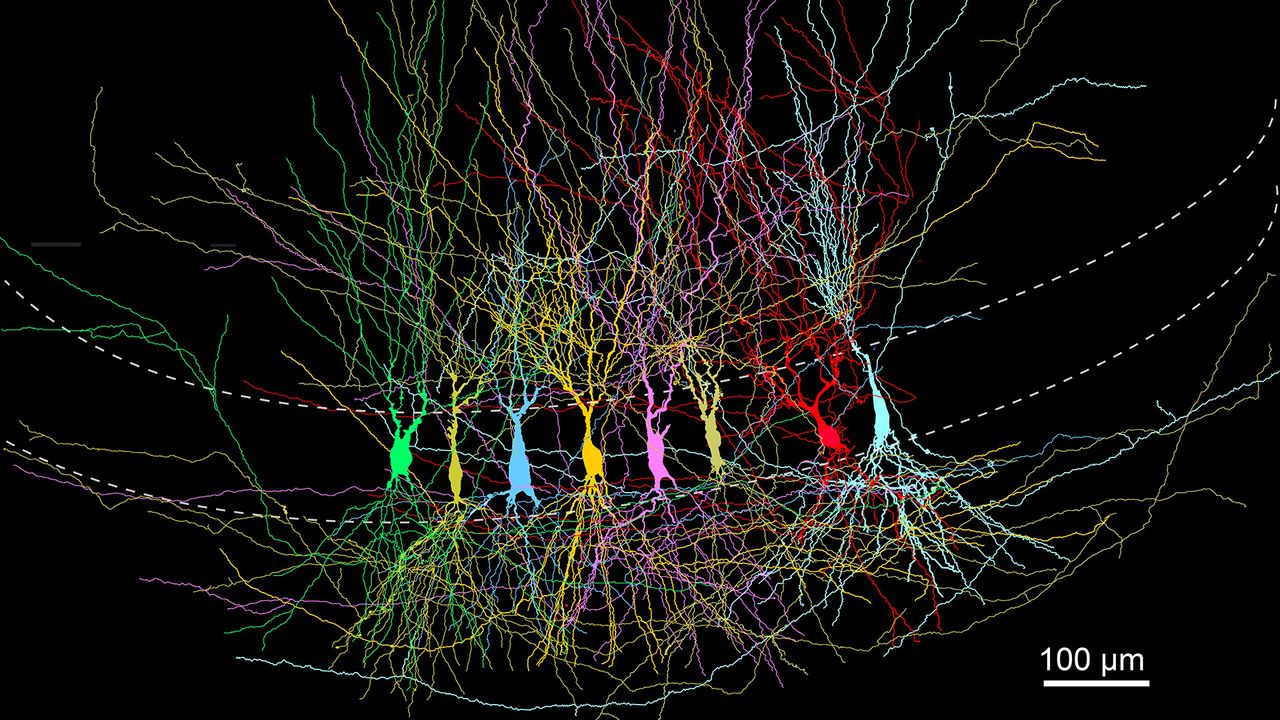
The Study's Finding
Published in a recent issue of Nature Neuroscience, the research team from the University of Cambridge used advanced imaging techniques to map the synaptic connections in the hippocampus of newborn mice. The hippocampus, a region critical for memory and spatial navigation, is traditionally thought to develop through a process of experience-dependent plasticity. However, the new findings suggest that the initial state is already densely wired.
Early Neural Networks: A Highly Connected Starting Point
The researchers observed that in the first few days after birth, hippocampal neurons formed an unexpectedly large number of connections—over 90% of the potential connections were present. This high density of synapses is akin to a blank canvas covered in paint splotches, rather than an empty canvas. The study found that these early networks are not random; they follow a pattern that allows for rapid communication across the region. Strong connections among neighboring cells suggest an inherent structure that primes the hippocampus for learning.
- High connectivity: Over 90% of possible neural connections were present at birth.
- Patterned wiring: Connections were not random but showed a spatial gradient.
- Implications: This pre-wired state may act as a scaffold for later learning.
Refinement Over Time: Sculpting the Neural Landscape
As the mice grew and explored their environment, the brain began pruning many of these early connections. By the time the mice reached adolescence, only about 40% of the original synapses remained. This process—known as synaptic pruning—is essential for forming efficient, specialized circuits. The study suggests that experience doesn't dictate the initial connections but rather selects which ones to keep or eliminate. This mechanism allows the brain to adapt to specific stimuli while maintaining a core framework.
- Initial overproduction of synapses in the first week.
- Experience-driven pruning that removes weak or irrelevant connections.
- Stabilization of the remaining connections into mature, stable networks.
The lead researcher, Dr. Emma Johnson, explained: "We thought the hippocampus was a blank slate waiting to be written on, but it's actually more like a chaotic library with books already on the shelves. Experience doesn't add new books—it helps rearrange and consolidate the ones already there."
Implications for Learning and Memory Development
This shift in perspective has profound implications. If early neural networks are highly connected, then learning and memory in infancy may rely heavily on the refinement of existing circuits rather than the construction of new ones. This could explain why early childhood experiences have such a lasting impact—they occur during a critical window when pruning is most active. Understanding this process may lead to new strategies for treating neurodevelopmental disorders such as autism or schizophrenia, where synaptic pruning is often disrupted.
Furthermore, the finding challenges the idea of the "tabula rasa" (blank slate) in education. Instead, it supports the concept that children are born with a rich neural infrastructure that requires targeted experiences to fine-tune. This aligns with the growing emphasis on early intervention programs that provide enriched environments.
For a deeper dive into related concepts, check out our article on methodology and future research below.
Methodology and Future Research
The study utilized two-photon microscopy to observe individual synaptic connections in living mouse brains over several weeks. By labeling specific neurons with fluorescent markers, the team could track which synapses were formed or eliminated. The mice were raised in standard cages, allowing natural exploration. Future studies aim to investigate whether environmental enrichment or deprivation alters the pruning timeline. Additionally, researchers hope to extend these findings to humans using non-invasive imaging techniques, though the ethical and technical challenges are significant.
"We're now exploring how maternal stress or nutrition might affect the initial connectivity," said Dr. Johnson. "If the starting point can be modified, it could have lifelong consequences for memory function."
Conclusion
The discovery that the brain's memory center begins with a dense, highly connected network rather than a blank slate revolutionizes our understanding of neural development. By revealing that early life wiring is then pruned into efficiency, the study highlights the dynamic interplay between genetics and experience. As we continue to unravel these mysteries, we move closer to harnessing this knowledge for educational and therapeutic interventions.
Related Articles
- How Cloudflare Engineered High-Performance Infrastructure for Large Language Models
- GPT-NL: The Netherlands' Bold Step Toward European AI Independence
- OpenAI Rolls Out Personal Finance Tools for ChatGPT Pro Subscribers in Limited US Test
- Anthropic Unveils Breakthrough AI Translation Tool: Claude's 'Thoughts' Now Readable in Plain English
- How Software Engineers Can Master Natural Language Programming: A Step-by-Step Guide Inspired by Arm’s Vision
- Guide to LiteLLM CVE-2026-42208 SQL Injection Exploited within 36 Hours of Di...
- Safeguarding Sensitive Information When Using Generative AI: The Role of Privacy Proxies
- Future-Proof Enterprise Java: From Jakarta EE to Quarkus and AI Integration