The Armored Arsenal: How Scorpions Forge Metal-Reinforced Weapons Through Evolution
Overview
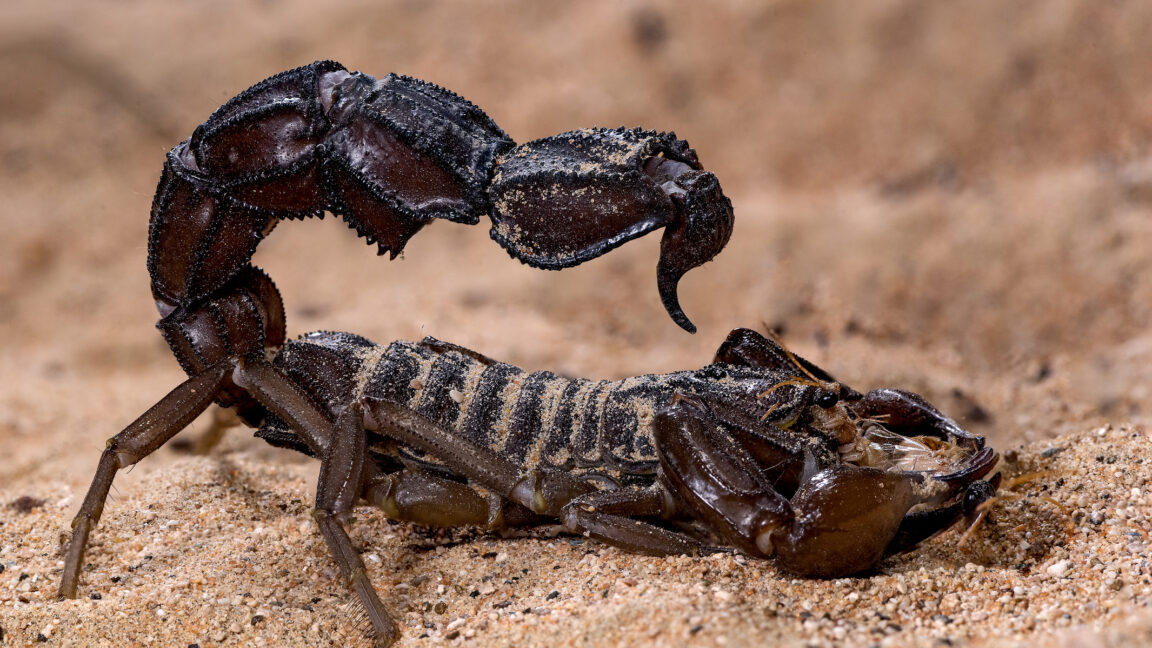
Scorpions are ancient arachnids that have roamed the Earth for over 400 million years, equipped with a formidable pair of front pincers (chelae or pedipalp appendages) and a venomous stinger (telson) at the tip of their tail. These biological weapons already look menacing, but beneath the surface lies a hidden secret: they are reinforced with metals like zinc, manganese, and iron. Since the 1990s, scientists have known these metals are present, but a critical question remained unanswered: Did scorpions evolve this metal reinforcement on purpose, or is it merely accidental contamination from the environment? In a groundbreaking study published in the Journal of The Royal Society Interface, biologist Sam Campbell and his team at the University of Queensland, Australia, set out to resolve this mystery. By examining the distribution of metals across stingers and pincers of multiple scorpion species, they found compelling evidence that the metal incorporation is a deliberate evolutionary adaptation—not a random occurrence. This guide will walk you through the science behind this discovery, the methods used, and what it means for our understanding of biological materials.
Prerequisites
To fully grasp the content of this tutorial, you should have a basic understanding of:
- Biology of arthropods: Familiarity with arachnid anatomy, especially the chelae (pincers) and telson (stinger).
- Elemental chemistry: Knowledge of metals like zinc (Zn), manganese (Mn), and iron (Fe) and their roles in biological systems.
- Evolutionary concepts: Understanding of natural selection and adaptation.
- Scientific methods: Basic grasp of microscopy and spectroscopy techniques used for elemental analysis (e.g., X-ray fluorescence, electron microscopy).
No prior research experience is required—this guide is designed to be accessible to curious readers, students, and educators alike.
Step-by-Step Guide to Understanding Scorpion Metal Reinforcement
Step 1: Recognizing the Presence of Metals in Scorpion Weapons
The first clue came from chemical analyses performed in the 1990s, which revealed that the pincers and stingers of scorpions contain surprisingly high concentrations of heavy metals—particularly zinc, manganese, and iron. These elements are essential for life in trace amounts, but here they are accumulated far beyond normal biological levels. For example, zinc is often used in enzymes, but in scorpion cuticle, it appears to harden the exoskeleton. At this stage, scientists could only report the presence; they couldn't explain the origin. Was it a side effect of living in metal-rich soils? Or was there a deeper evolutionary purpose?
Step 2: Formulating the Evolutionary Hypothesis
Sam Campbell and his colleagues proposed a key question: If the metals are merely environmental contaminants, then different scorpion species from diverse habitats would show random, inconsistent metal distributions. However, if the metals are functionally important and evolved by natural selection, they should appear in specific, repeatable patterns across species—particularly in the regions that experience the most mechanical stress (e.g., the tips of stingers and the cutting edges of pincers). This hypothesis set the stage for a systematic investigation.
Step 3: Collecting and Preparing Samples for Analysis
The team gathered specimens of several scorpion species from different geographical locations. They carefully dissected the pincers and stingers, ensuring no external contamination from handling. To rule out accidental pickup, they also collected soil and water samples from the habitats to compare metal concentrations. The samples were then prepared for high-resolution imaging and elemental mapping using techniques like scanning electron microscopy (SEM) coupled with energy-dispersive X-ray spectroscopy (EDS). This allows scientists to visualize the exact location of each metal within the cuticle.
Step 4: Mapping Metal Distribution Across Species
The core of the study involved generating elemental maps of the pincers and stingers. The results were striking: In every species examined, zinc, manganese, and iron were concentrated in the outermost layers of the cuticle, especially at the tips of the telson and the inner edges of the chelae. The metals were not uniformly distributed but were precisely localized to areas that undergo the highest wear and tear during hunting and defense. Moreover, the relative proportions of metals varied slightly among species, but the pattern of enrichment was consistent—strong evidence of evolutionary control rather than random environmental uptake.
Step 5: Comparing with Environmental Levels
To confirm that the metals were not simply absorbed from the environment, the team measured metal concentrations in the surrounding soil and water. They found that the levels in scorpion weapons were orders of magnitude higher than in the habitat, and there was no correlation between environmental metal availability and the amounts in the tissues. For instance, scorpions from zinc-poor soils still had zinc-rich weapons. This ruled out the contamination hypothesis and pointed to active biological mechanisms for metal incorporation.
Step 6: Interpreting the Results as an Adaptation
Based on the data, the researchers concluded that scorpions have evolved specialized biochemical pathways to extract metals from their diet or environment and deposit them into their exoskeleton during molting. The metals serve a structural role similar to mineralization in teeth or bones—they harden the cuticle, making the stinger more effective at penetrating prey or predators and the pincers more durable for gripping and crushing. This metal-reinforcement is an example of biomineralization, where organisms harness inorganic elements for mechanical advantage. The study was published in 2023 (or appropriate recent year) and has been widely discussed in evolutionary biology circles.
Common Mistakes
- Assuming the metals come from the environment randomly: Many people think scorpions simply pick up metals from soil or prey. But the consistent patterns across species show this is an active, evolved trait, not passive contamination.
- Thinking all scorpion species have identical metal compositions: While the presence of metals is common, the exact ratios of zinc, manganese, and iron can vary between species, reflecting different ecological niches or evolutionary histories. This is not a one-size-fits-all phenomenon.
- Believing the metals are in the venom itself: The metals are in the cuticle (the hard outer covering) of the stinger and pincers, not in the venom. The venom remains a separate protein-based toxin delivery system.
- Overlooking the functional significance: Some might dismiss this as a trivial curiosity, but metal reinforcement greatly enhances the weapon's durability. Without it, the stinger might break more easily during penetration, reducing the scorpion's hunting or defensive success.
- Confusing correlation with causation: Just because a scorpion lives in a metal-rich environment doesn't mean its weapons will be metal-reinforced. The study showed no direct link, confirming that genetics and evolution drive the process.
Summary
Scorpions have evolved a remarkable ability to reinforce their pincers and stingers with metals like zinc, manganese, and iron—a discovery that has been known since the 1990s but only now understood as an intentional adaptation. Sam Campbell's research at the University of Queensland demonstrated that the distribution of these metals is specific, consistent across species, and independent of environmental levels, proving that this is an evolved trait rather than accidental contamination. This metal biomineralization provides mechanical strength, enhancing the effectiveness of scorpion weapons. By walking through the steps of identifying the metals, testing the evolutionary hypothesis, mapping distributions, and ruling out environmental uptake, we gain a deeper appreciation for how nature engineers materials at the molecular level. The study underscores the power of interdisciplinary science—combining biology, chemistry, and materials science—to unravel the secrets of organismal design.
Related Articles
- Understanding the Widening Math Gender Gap: A Guide to TIMSS 2023 Findings and Implications for Educators
- Crafting a High-Quality Human Data Collection Pipeline for Machine Learning
- Mastering RF Coexistence Testing in Shared Spectrum Environments: A Practical Guide
- Coursera Report Reveals Progress in Closing Gender Gap in Generative AI and Critical Thinking Skills
- 10 Crucial Facts About the Increasingly Competitive NIH Grant Landscape
- Mastering Markdown on GitHub: A Beginner's Guide
- 10 Ways AI Is Transforming Database Management (And Where It Still Falls Short)
- Navigating the Coursera-Udemy Merger: A Comprehensive Guide for Learners and Instructors